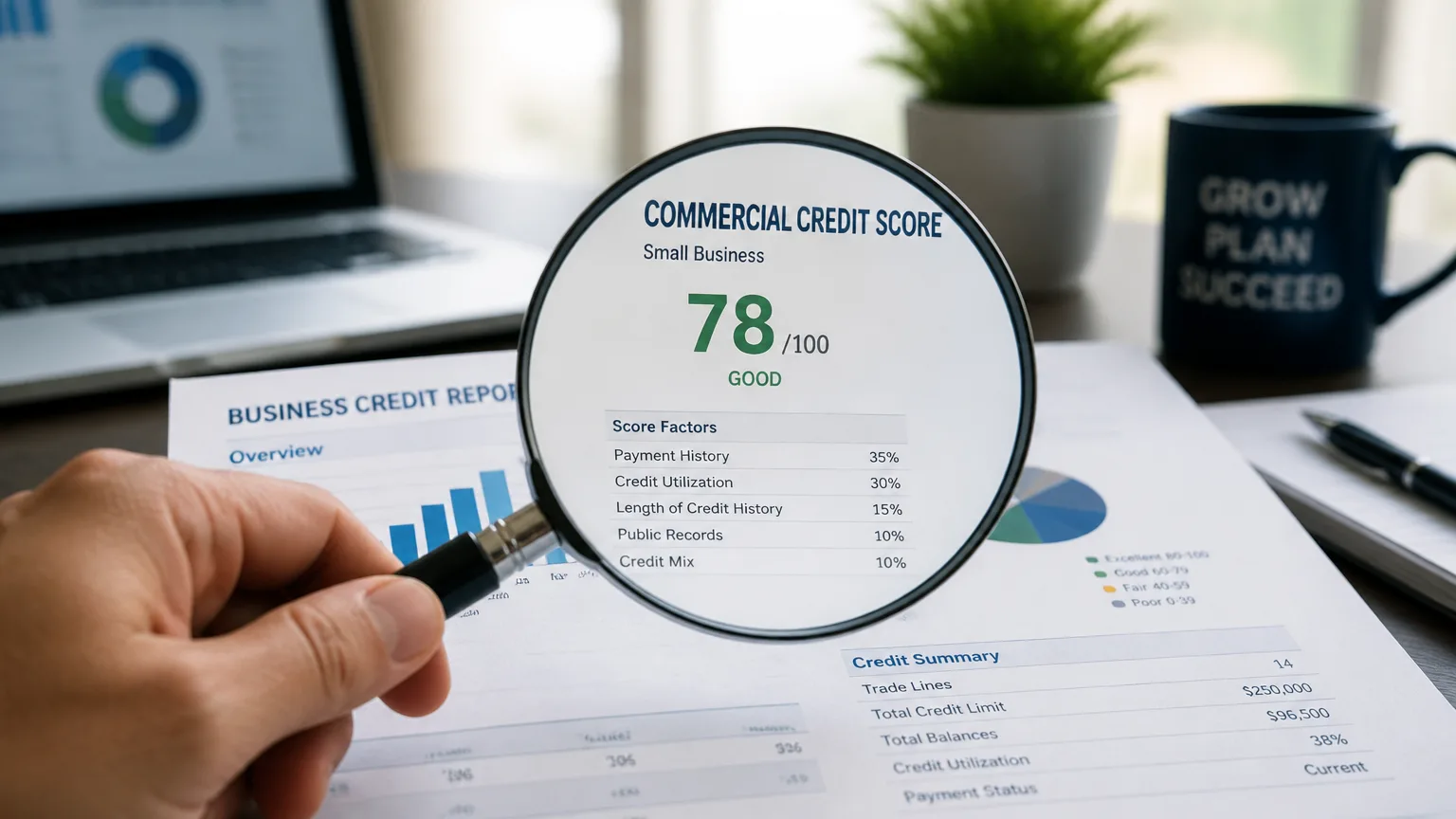
Understanding your commercial credit score is essential for the success of your small business. Unlike personal credit scores, which reflect individual borrowing behavior, commercial credit scores focus on your business’s financial health and creditworthiness. Many small business owners may not realize how significantly these scores impact their ability to secure financing, negotiate terms, and establish relationships with suppliers.
A strong commercial credit score can open doors to better loan options, lower interest rates, and favorable payment terms. Conversely, a low score may limit your business’s growth potential and hinder your ability to make critical investments. This distinction between personal and business credit scores is crucial; while personal scores often follow you throughout your life, your commercial score is tied specifically to your business’s performance.
In this article, we’ll explore the key components of commercial credit scores, how to monitor them, and practical steps to improve your score. By understanding these elements, you can better navigate the financial landscape and position your small business for success.
1. What Are Commercial Credit Scores?
Commercial credit scores evaluate the creditworthiness of a business, much like personal credit scores do for individuals. These scores provide lenders and suppliers a snapshot of your business’s financial health and reliability.
Several key factors influence your commercial credit score. Payment history is paramount; timely payments boost your score, while late payments can significantly lower it. Credit utilization also plays a role; maintaining a low balance relative to your total credit limit shows responsible credit management.
Additionally, public records, such as bankruptcies or liens, can negatively impact your score. Monitoring these elements helps you understand your score and address any issues before they become critical. By staying informed, you can take proactive steps to enhance your commercial credit score and strengthen your business’s financial identity.
2. How Are Commercial Credit Scores Used?
Commercial credit scores play a crucial role in the decision-making processes of lenders, suppliers, and financial institutions. Lenders primarily use these scores to assess the risk associated with providing loans. A higher score indicates a lower risk, making it easier for your business to secure financing at favorable terms.
Suppliers also rely on credit scores before extending credit terms. For instance, a supplier may check your score to determine whether to offer net-30 or net-60 payment terms. A strong commercial credit score can lead to better payment terms, allowing your business to manage cash flow more effectively.
Additionally, financial institutions often review these scores when evaluating applications for credit cards or lines of credit. Understanding how these scores impact your business interactions is essential. By maintaining a solid commercial credit score, you can unlock opportunities and foster stronger relationships with key partners.
3. Factors That Impact Your Commercial Credit Score
Several key factors influence your commercial credit score, and understanding them is crucial for your business’s financial health.
Payment history is one of the most significant components. Timely payments on loans, credit cards, and invoices contribute positively to your score. Conversely, late payments can have a detrimental effect, so prioritize meeting deadlines.
Another important factor is credit utilization. This refers to the ratio of your current credit balances to your available credit limits. High credit utilization can negatively impact your score. Aim to keep this ratio below 30% to maintain a healthy credit profile.
Credit inquiries also play a role. Each time you apply for credit, a hard inquiry occurs, which may slightly lower your score. Limiting the number of applications you submit can help protect your score from unnecessary dips.
By being aware of these factors, you can take proactive steps to enhance your commercial credit score and strengthen your business’s financial identity.
4. Steps to Improve Your Commercial Credit Score
Improving your commercial credit score is a vital step in enhancing your business’s financial health. Start by ensuring you pay all your bills on time. Payment history significantly impacts your score, so setting up reminders or automatic payments can help you stay on track.
Next, make it a habit to monitor your credit reports regularly. By doing so, you can identify any errors or inaccuracies that may be dragging down your score. If you spot any discrepancies, address them immediately with the reporting agency to rectify the issue.
Another effective strategy is to maintain a low credit utilization ratio. Aim to use less than 30% of your available credit. This demonstrates to lenders that you manage credit responsibly.
Lastly, build strong relationships with your suppliers. Establishing a positive payment history with them can also contribute to your overall commercial credit score. By taking these steps, you can create a solid foundation for your business’s financial identity.
5. Common Mistakes to Avoid
Managing your commercial credit score effectively is crucial for your business’s financial health. One common pitfall is maxing out credit cards. This can severely harm your utilization ratio, which accounts for a significant portion of your score. Aim to keep your credit utilization below 30% to maintain a healthy score.
Another mistake is overlooking payment deadlines. Late or missed payments can significantly reduce your score and tarnish your reputation with lenders. To stay organized, consider setting up reminders or using automated payment systems.
Additionally, neglecting to monitor your business credit report can lead to unexpected surprises. Regularly checking your score can help you identify and address any discrepancies quickly. For a deeper dive into managing your business credit, refer to Unlocking Business Success: The Complete Guide to Your DUNS Number. By avoiding these common mistakes, you can protect and improve your commercial credit score.
Final Thoughts on Managing Your Commercial Credit Score
Understanding and managing your commercial credit score is essential for your small business’s success. A solid score can significantly enhance your chances of securing financing, whether it’s a loan, credit line, or partnership opportunity.
By staying informed about your score and actively working to improve it, you can ensure long-term business health. Regular monitoring allows you to catch discrepancies early and make informed decisions.
Remember, a strong commercial credit score not only opens doors but also builds trust with suppliers and creditors. Take these steps to establish a resilient financial identity and position your business for growth. Your proactive approach today can lead to greater opportunities tomorrow.