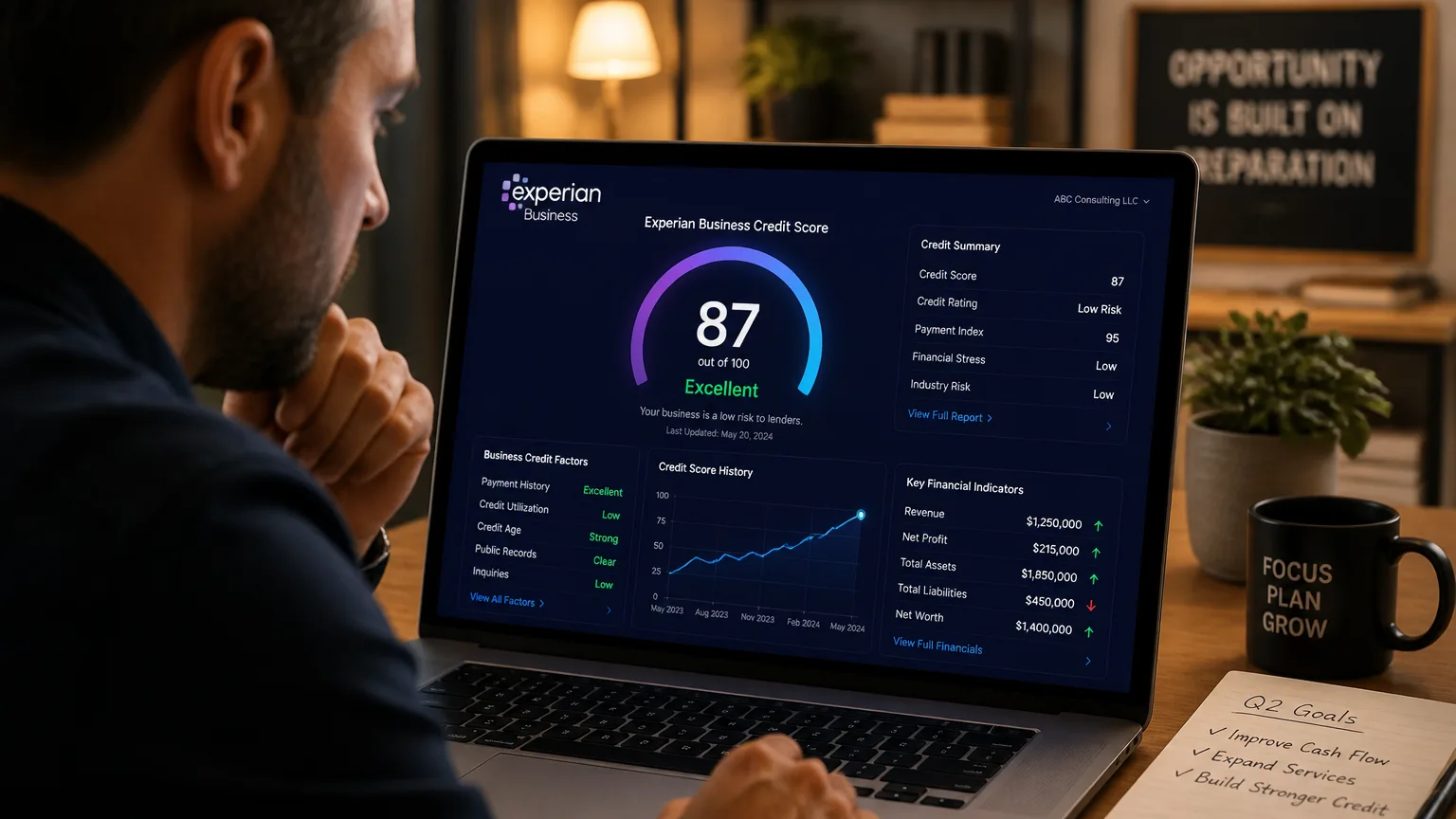
Understanding your Experian business credit score is crucial for securing financing and building a solid financial foundation. As one of the leading credit reporting agencies, Experian plays a significant role in evaluating business creditworthiness. A strong score can unlock better loan terms, attract investors, and even enhance supplier relationships.
For small business owners, grasping the factors that influence their scores is essential. Various elements, such as payment history, credit utilization, and business longevity, can impact how lenders perceive your financial reliability. It’s not just about numbers; it reflects your business’s financial health and reliability.
Navigating the world of business credit may seem daunting, but it’s vital for growth and sustainability. By understanding your Experian business credit score, you empower yourself to make informed decisions. This article will provide essential insights into how your score is calculated, how to improve it, and why it matters for your business’s future. Let’s dive deeper into the world of business credit and set your company up for success.
1. What is an Experian Business Credit Score?
The Experian Business Credit Score is a numeric representation of your business’s creditworthiness. Ranging from 1 to 100, it helps lenders evaluate how likely you are to repay debts. This score is crucial when seeking loans or credit lines, as it directly impacts your ability to secure funding.
Experian calculates your score using a proprietary scoring model that considers various factors. Key components include your payment history, credit utilization, and the length of your credit history. For example, consistently paying bills on time can significantly boost your score.
It’s important to note the differences between personal and business credit scores. While personal scores focus on individual credit behavior, the Experian business credit score reflects your company’s financial health and reliability. Understanding these distinctions is vital for managing your business’s credit profile effectively.
2. Key Factors Impacting Your Score
Understanding the factors that influence your Experian business credit score is crucial for improvement. One of the most significant elements is your payment history. Timely payments demonstrate reliability, while late payments can negatively impact your score. Aim to pay bills on or before their due dates to maintain a positive track record.
Another key factor is credit utilization, which measures how much of your available credit you’re using. A lower utilization ratio indicates better credit management. Ideally, keep this ratio below 30% to show lenders that you can handle credit responsibly.
Additionally, public records, such as bankruptcies or liens, can severely affect your score. These records signal financial distress and can linger for years. Lastly, inquiries into your credit report can also play a role; too many hard inquiries in a short period can signal risk to lenders. By focusing on these areas, you can take actionable steps toward improving your Experian business credit score.
3. How to Improve Your Business Credit Score
Improving your Experian business credit score is a proactive journey. Start with consistent on-time payments. Establish a routine for settling bills, whether they are vendor invoices or loan repayments. This habit not only builds trust with creditors but also strengthens your credit profile.
Next, focus on reducing existing debt. High debt levels can negatively impact your score, so prioritize paying down outstanding balances. Consider creating a debt repayment plan. By lowering your debt-to-credit ratio, you signal to lenders that your business is financially responsible.
Monitoring and managing your credit is equally important. Stay informed by regularly checking your business credit report. This helps you identify any discrepancies or areas needing attention. Tools and services are available that can provide insights into your credit status and alert you to changes. For a comprehensive guide on enhancing your score, check out Boost Your Business Credit Risk Score in 30 Days: A Step-by-Step Guide.
By implementing these strategies, you can create a more favorable financial identity for your business, paving the way for future growth and opportunity.
4. Common Misconceptions About Business Credit Scores
Many small business owners hold misconceptions about the Experian business credit score that can lead to confusion. One prevalent myth is that personal credit scores have a significant impact on business scores. While personal credit may play a minor role, your business credit score primarily reflects your company’s financial behavior and payment history.
Another common misunderstanding is how scores are calculated. Business credit scores are not solely based on revenue or personal guarantees; they consider payment history, the age of credit accounts, and more. This means that timely payments and maintaining a diverse credit mix are crucial for a healthy score.
Regularly reviewing your credit report is vital. Many business owners neglect this step, unaware that errors can negatively affect their scores. By checking your report, you can identify and dispute inaccuracies, ensuring your Experian business credit score accurately represents your business’s financial health.
5. Utilizing Your Business Credit Score for Growth
A strong Experian business credit score is more than just a number; it’s a powerful tool for growth. With a good score, you can access better loan terms and interest rates, making financing options more affordable. This can be particularly beneficial when looking to expand your operations or invest in new opportunities.
Moreover, a solid credit score can attract potential investors and partners. They often look for businesses with reliable credit histories, as it signals stability and responsible financial management. This credibility can open doors to collaborations and funding that might otherwise be out of reach.
Additionally, improving your business credit score can enhance your relationships with suppliers. A favorable score demonstrates your reliability, which may lead to better payment terms or discounts. For more strategies on elevating your score, check out Unlock Fast Success: Your Complete Guide to Business Credit Requirements. By leveraging your Experian business credit score, you can create a solid foundation for future growth.
Conclusion: Building a Strong Business Credit Foundation
Understanding your Experian business credit score is crucial for your company’s success. Regularly monitoring and maintaining your score empowers you to make informed financial decisions. By implementing the strategies discussed, you can achieve tangible improvements that enhance your credit profile.
Remember, a strong credit score not only opens doors to better financing options but also builds trust with suppliers and partners. Taking charge of your credit dynamics is an essential step in fostering business growth. With this knowledge, you’re well on your way to establishing a solid financial foundation that supports your business ambitions.